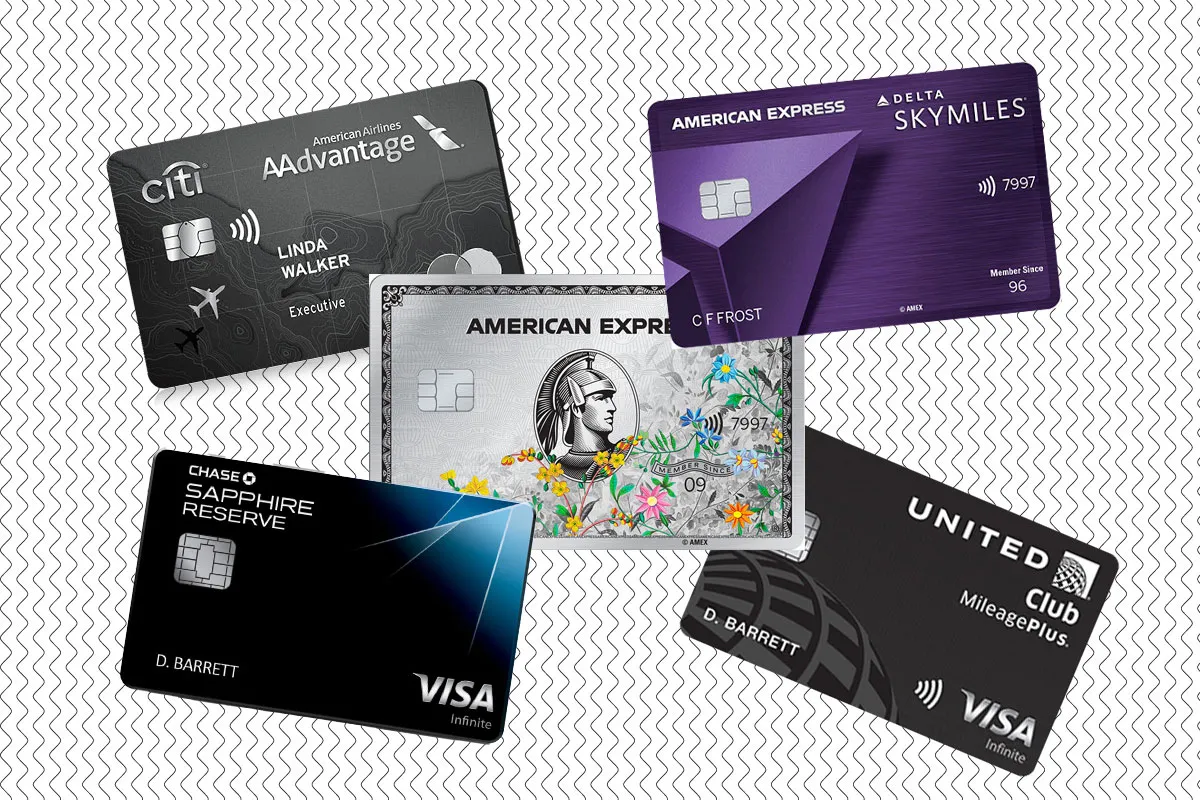
Organizing your purchases and expenses while you travel, whether it is just for a semester studying in another country, or if you take a whole gap year of travel after high school/college, can be overwhelming! We want to help you pick which travel credit card is right for you!
There are many types of Travel Credit Cards available to consumers today and it can be easy for someone who’s never had one before to make the wrong choice because they don’t understand how Travel Credit Cards work. Even if you plan on traveling frequently, as either a student or tourist, you will want to select a card that will ensure the two best benefits – maximizing your rewards (bonus points) and/or minimizing your costs (foreign currency exchange rate and fees).
So, as you begin to look into selecting a travel credit card for yourself, we would like to take some time to highlight some of the best Travel Credit Cards that are available to students who will be studying abroad. Then, you will be able to see how they compare to one another in every way – annual fees and bonus points earned, for example.
It is important to note that at Go Overseas, our goal is to connect you to all of the resources you will need to make meaningful travel experiences while abroad! The information provided here in this article reflects only the author’s independent research and recommendations, as a fellow study abroad alum, and has not been independently verified or endorsed by any financial institution or travel card issuer.
Benefits of signing up for a credit card as a study abroad student
If you are an international student or are taking a gap year, a credit card can be a great way for you to get started with building your credit. If you have no idea how it all works, here is a quick explanation:
Credit card companies create incentives for you to use their services by offering you a chance to earn rewards and enjoy a lower interest rate on purchases made with your card. The best way to maximize your benefits is to obtain a study abroad credit card prior to leaving your home country and only use this card while abroad. You will be able to build your credit history by doing so, and you will also have additional money available for your travels!
If you are not interested in earning reward points, but rather are focused on saving money, you should obtain an International Student Identity Card (ISIC) issued by your school (most schools offer this). With an ISIC, you will be able to prove you are a student when you need to purchase textbooks in New Zealand or to see museums in Spain. An ISIC will help you to prove your status as a student in all countries and provide you with access to many different types of discounts around the world.
Be careful about spending — a credit card isn’t free money!
Credit cards encourage you to spend while they’re hot; however, when not used responsibly this can create very high levels of debt.
Further, credit card debts carry a much higher cost than most other debts. Based on your credit card interest rate and minimum payment, if I owe you $1,000 now and want to pay it off over 5 years (60 months), I could potentially have to pay you $4,000 in interest only! If I miss payments on that same credit card, this could also reduce my credit score and make it much more difficult for me to qualify for loans and/or stick with an apartment in the future.
“I went to Spain with my credit card in my pocket during a study abroad program. The temptation to spend and not think was really huge, and when I returned home, I found out I owed over $1,500. I was pretty scared because I didn’t have any money available to make payments!” – Andrea P.
Cards for beginners with no to average credit
Wondering how to obtain fantastic travel points or cash back credit cards without having developed a Credit History?
Luckily, it is feasible that you will be able to find some excellent travel rewards and Refundable Cards that cater specifically for people without any previous borrowing experience. When looking for a suitable card, be sure to review the features and advantages the card provides before making application for it. You may also wish to consider selecting a credit card with No Fees, or with No Foreign Transaction Fees, as they are often incurred during study abroad programs!
1. Discover It Secured Credit Card (Best for starting credit)
For anyone beginning their credit journey or having only that first step on the credit file, then Discover It Secured Credit Card would make a good fit as it comes with a $200 to $2500 initial line of credit which is determined by the amount of your security deposit. In essence, you would need to put down a $200 security deposit to receive a $200 limit, and likewise for any other limits.
As far as the security deposit goes, you can request to have it returned to you (provided there is no remaining balance on the account) after a minimum of 7 months from your date of account opening. You will not be charged an annual fee for this card; however, if you do not make your payment within 30 days after the due date you may incur a late fee.
✅Pros:
- Build your credit with responsible use
- Earn cash back rewards with no annual fee
❌Cons:
- You must prove that you’ll be able to pay your bill
- Requires a security deposit
Recommended credit score: no minimum credit score
2. Capital One SavorOne Student Cash Rewards Credit Card (Best for building credit score)
Capital One’s SavorOne Student Cash Rewards Credit Card Provides an excellent opportunity for students to Build Their Credit. The SavorOne card has No Annual Fee and No Foreign Transaction Fees, making it a great option For Students With A Tight Budget Who Want To Travel Overseas. In addition to these Great Features, Students Who Have The SavorOne Card Can Enjoy Rewards That They Can Redeem For Cash Back, Or Gift Cards. You Will Earn Between 1% and 8% In Cash Rewards Every Month Depending On Your Monthly Spending.
The Mobile Application Allows Users To Lock Their SavorOne Accounts Remotely In Case They Lose Their Card Or They Misplace Their Card While Out Of Town (Or They’re Just Worried About Security). In Other Words, If you Experience Fraud On Your Account While Traveling In An Unknown Country (which is often more common when Traveling To An Unknown Country), The $0 Fraud Liability Guarantee Means That Capital One Will Credit You For Any Unconfirmed Transactions On Your Account.
✅Pros:
- $100 intro rewards when you spend $100 in the first three months
- No foreign transaction fees
❌Cons:
- Rotating bonus rewards categories need to be activated monthly, so you’ll need to keep track of your rewards more closely than a flat rate rewards card.
- No specific travel rewards (miles, bonus points for travel expenses)
Recommended credit score: 540 – 740
Cards for spenders with good to excellent credit
Great news for many college students with a solid credit history! There are an abundance of credit cards available to students with very strong credit histories; however, because of the high fees and/or extremely high APR rates on these cards, they may not be the best choice for those students who want to get the most rewards from their purchases. Students that do earn a consistent income will find that, if they have enough income to pay their credit card balances off completely each month, there are benefits to using one of these credit cards!
3. The Chase Freedom Flex (Best for cash-back for travel bookings)
The Chase Freedom Flex card is a great cash-back rewards card specifically for making travel purchases. There is no annual fee, and every quarter you can activate rotating categories offering 5% back on a maximum of up to $1,500 in combined purchases made in those categories. For all other purchases, you will earn 1% back on everything you buy.
Additionally, the card has a 0% introductory APR on all purchases for the first 15 months, and the purchase category is not limited to the rotating categories; you will still earn 1% for all purchases outside of those categories. Because the Chase Freedom Flex card offers rewards based on the dollar amount spent rather than the business from which the item is purchased (e.g., a gas station vs. Target), you will not have to worry about whether or not your purchase came from one of those two places.
The only exception to the incentive structure is that you will not earn any bonus rewards for travel-related purchases made from a hotel, airline, car rental service, or similar business; however, you will earn an additional 1% if the purchase is made from a business category other than the three mentioned previously (i.e., travel).
✅ Pros:
- No annual fee
- $200 cash back intro bonus
❌ Cons:
- There’s a foreign transaction fee of 3% on purchases made overseas
- It doesn’t offer travel-specific perks
Recommended credit score: 670 and up
4. Wells Fargo Autograph Card (Best for high intro rewards without an annual fee)
If your goal is to get the maximum amount of rewards without having an annual fee or paying more than $50 a year for foreign transactions, then the Wells Fargo Autograph Credit Card is an excellent choice.
This card provides one of the greatest introductory offers for bonus rewards, as well as no annual fee. You will earn 15,000 bonus points when you spend $3,000 within three months of opening your account (up to $150). The card has a bonus rewards earnings rate of one to three reward points per dollar spent.
There is no foreign transaction fee when you use this card outside of the U.S. Additionally, this card has no penalty APR, which allows you to maintain your high credit score even during difficult financial times. This card also protects you from the risk of purchasing through unauthorized use, giving you zero liability for any purchases made with it!
✅ Pros:
- No annual fee
- 30,000 points intro offer
❌ Cons:
- Must have good to excellent credit, between a 690-850 credit score.
- No option to transfer points to airline or hotel programs.
Recommended credit score: 700 and up
5. Bank of America Travel Rewards Credit Card (Best for flexible rewards)
Students looking for a credit card that can accumulate flexible rewards should consider utilizing the travel rewards card available through Bank of America. Additionally, this card does not have an annual fee as well as a foreign transaction fee. New cardholders will also receive bonus points (25,000) after making a minimum purchase of $1,000 within the first 90 days after receiving their card.
In addition to receiving bonus points on your purchases through their website (not at airports or hotels), you will receive one bonus point for every dollar you spend through their website. For example, your $500 purchase for airline tickets with this card is worth (500) bonus points! Each dollar spent will earn 1.5% cash back. You can redeem your points for statement credits, gift cards, merchandise, travel, and more. Finally, for the first 15 billing cycles, you will pay 0% APR.
✅ Pros:
- No annual fee
- 25,000 bonus points ($250) intro offer
❌ Cons:
The sign-up bonus is low compared to other travel rewards cards.
Make $1,000 purchases within the first 90 days to qualify for the intro offer.
Recommended credit score: 690 – 850
Cards for advanced spenders willing to pay an annual fee
Different credit cards come with different perks and fees; therefore annual fees may be worth paying for a card when you have a lot of benefits from that card. If you’re an international student and earn an excellent salary, or if your parents are willing to assist you in paying for your tuition and living expenses, then an annual fee shouldn’t deter you from applying for the right credit card for you. If you’re still not certain about whether or not an annual fee is justified, then you may want to stay away from cards with annual fees. However, if you tend to spend a significant amount of money in your everyday life and will continue doing so while abroad, the benefits offered by those credit cards will greatly outweigh the annual fees you’ll pay on them.
6. Chase Sapphire Preferred Card (Best for big sign-up bonuses)
The Chase Sapphire Preferred Card is an excellent option for people that do not mind meeting high spending thresholds and have large amounts of spending to qualify for it. Once you have met the minimum spend of $4,000 in the first 3 months after opening your account, you are eligible for a signing bonus of 50,000 points (a value of $625 towards travel). This bonus is the best award we have received from any card to date, but keep in mind that there is an annual fee of $95 associated with the card.
You will earn 2 points for every dollar you spend on travel and dining out, or 3 points for every dollar you spend on travel purchased using Chase’s rewards portal. All other purchases will earn 1 point for each dollar spent.
✅ Pros:
- Offers a sign-up bonus of 50,000 points (worth $625 in travel)
- No foreign transaction fees
❌ Cons:
- It has a high minimum spending requirement to qualify for the intro offer.
- $95 annual fee
Recommended credit score: 690 and up
7. Citi Premier Card (Best for all kinds of spending)
When it comes to earning credit card rewards on everyday spending, Citi Premier is an excellent choice. You will earn 1-3 times the points for all types of everyday expenses. In addition to a high earning rate, you will receive $100 in travel credits each year to help offset the costs of airline and hotel reservations made while traveling.
Whether you’re flying home for the holidays or traveling overseas, this card can lighten some of your travel expenses. You also receive a lower interest rate than you would receive with most other credit cards when transferring balances from high-interest rate credit cards to the Citi Premier Card. This can be a great advantage when you need to pay off high-interest debt prior to traveling internationally.
✅ Pros:
- An annual hotel benefit — $100 off a single hotel stay of $500 or more
- 80,000 points intro rewards offer
❌ Cons:
- $95 annual fee
- You can no longer redeem airline points as high as this card used to offer in the past.
Recommended credit score: 670 and up
8. Capital One Venture Rewards Credit Card (Best for simple rewards)
The Capital One Venture Rewards Credit Card is a straightforward airline mileage card for international students who are interested in earning mileage with minimal hassle when it comes to redemptions. The card offers 2x miles for each dollar spent which increases depending on multiple factors. As an added incentive, you could earn a sign up bonus of 75,000 miles after spending $4,000 on the card within 3 months of acquiring it.
Another bonus of owning this credit card is that you’ll get reimbursed for the cost of applying for a TSA Precheck or a Global Entry membership. To redeem your reward miles, all you have do is purchase airline tickets via Capital One’s travel website and at no time will you have to convert points to miles, etc.
✅ Pros:
- 75,000 miles intro offer
- Reimburses $100 application fee for TSA precheck or Global Entry
❌ Cons:
- $95 annual fee
- There aren’t many domestic options for transferring miles to airline loyalty programs.
Recommended credit score: 690 and up
How to build good credit as a student
Here are a few ways to establish a good credit history as a college student, and tips on how to use your new credit card wisely.
- Choose a credit card; find one that works for you as a student.
- Use your credit card responsibly. The only time you should be using your credit card is when you need to purchase something, not just to go out shopping. Remember that every time you use your credit card, it takes money out of your account right away (i.e., no limit).
- Pay your balance each month! Do not carry over any debt from one month to the next. Always pay what you owe until the balance is $0. This way, if you are late, creditors won’t register a late payment and affect your credit score negatively.
- Set up direct debit payments. If you are unable to pay your credit card in full right away, set up direct debit payments from an alternate bank account. You won’t forget to make a payment on your credit card.
- Build an on-time payment history with your credit card issuer. By establishing a consistent payment history with your new credit card, you will develop an excellent borrowing history.
Tips for better spending habits while abroad
As a student about to study abroad, you can save money on travel and day-to-day expenses with a credit card. To take full advantage of this opportunity, practice good spending habits and know how to create a budget! Below are some tips for creating a budget to ensure that your money is spent wisely:
- Establish a budget. Many students spend more money on souvenirs, food, and restaurants when traveling abroad. You’ll want to have an idea of how much you’ll be spending every month before your trip, then you can determine and stick to a rough estimate of your monthly living expenses and other things like food, excursions, and activities. To do this, start by calculating your monthly rent, then you’ll need to set a budget for the remaining monthly expenses using that number.
- Set up an automatic savings account. An easy way to save money for living expenses while abroad is to set up automatic deposits from your regular checking account every month to your separate savings account, to ensure you always have enough money to pay for the things you need without ever being in a position of needing to borrow money.
- Create an emergency fund. It’s fine to save money for fun things you want to do while you’re abroad, but you should also have an amount set aside for emergencies like medical bills or needing to return home for an emergency.
Choose the right card
There are several fantastic international travel credit cards, but they all come with their own unique advantages and disadvantages. Ultimately, your choice of card will depend on your personal preferences and needs. For example, if you do a lot of travelling, and want to earn travel-related rewards for your travel purchases, an airline credit card may be the best option for you.
On the other hand, if you enjoy travelling internationally, but don’t want an annual fee or a high monthly balance, you might consider a no annual fee travel rewards credit card. It’s important to remember that not all credit cards offering international travel rewards will suit everyone, so be sure to do your research before you apply!